
How to Avoid Over-Wetting Carpets (Wicking): A Professional Cleaner’s Guide
Introduction
Over-wetting carpets is one of the most common mistakes in carpet cleaning, and one of the easiest ways to create callbacks, complaints, and avoidable damage.
More water does not equal better cleaning. In fact, excessive moisture is usually a sign of poor extraction, improper technique, or underpowered equipment.
At Kleen Kuip Supply Mart Inc., we regularly help homeowners and professionals fix issues caused by over-wetting using proper equipment, chemistry, and training.
What Is Carpet Wicking and Why Over-Wetting Causes It
Carpet wicking is what happens after an over-wet cleaning job, once the carpet begins to dry.
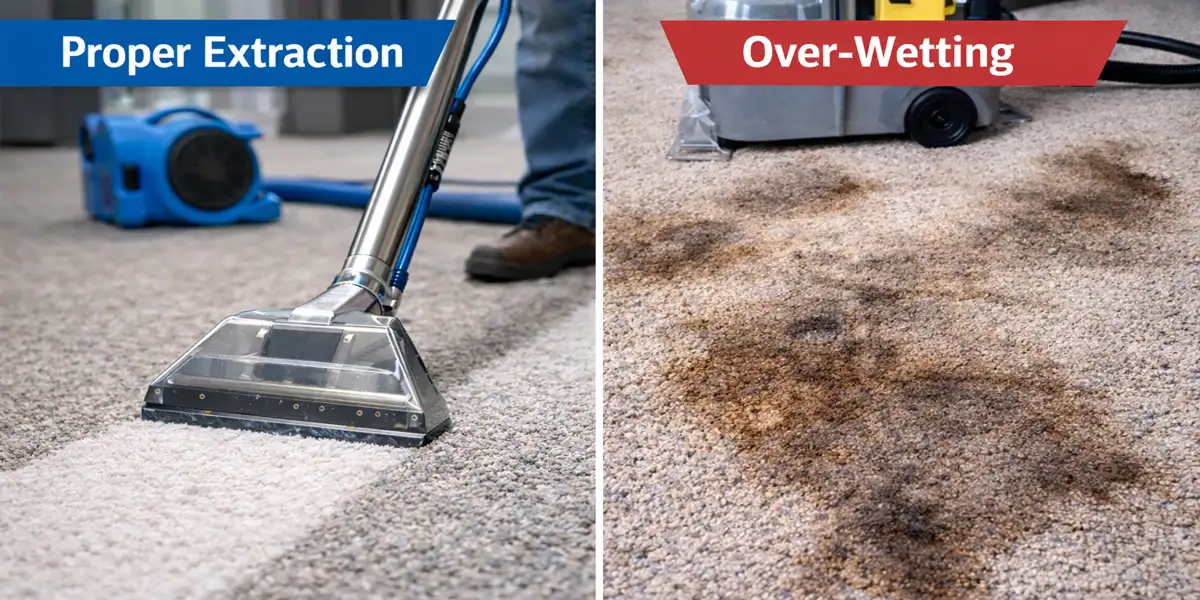
When too much water is used, moisture penetrates into the carpet backing and padding. As that moisture evaporates, it pulls dissolved soil, residues, and contaminants back up through the carpet fibers. The result is dark stains or browning that reappear hours or days later, even though the carpet initially looked clean.
This is why customers often say:
- “It looked great yesterday”
- “The stains came back”
- “Now it looks worse than before”
That isn’t bad luck. That’s wicking.
Common Signs of Wicking and Browning
Wicking caused by over-wetting typically appears as:
- Irregular brown or gray blotches
- Dark outlines where cleaning passes ended
- Stains that match previous spill locations
- Discoloration that shows up after drying, not immediately
These stains are not new contamination. They are old soil being pulled back to the surface due to excessive moisture.
Common Causes of Over-Wetting Carpets
1. Underpowered or Rental Machines
Rental units and low-performance extractors often lack sufficient vacuum lift to recover moisture effectively. They spray water but cannot remove it efficiently.
2. Too Much Chemical
Over-application of detergent leaves residue behind. Residue attracts dirt and encourages over-wetting because cleaners compensate by adding more water.
3. Poor Extraction Technique
Fast passes, skipping dry strokes, and improper wand angle all leave water behind. Technique matters as much as equipment.
4. No Rinse Pass
Failing to rinse means detergent stays in the carpet, increasing moisture retention and soil attraction.
5. Lack of Airflow
Even well-cleaned carpets need airflow. Without proper drying, moisture lingers where you cannot see it.
Why Cheap or Underpowered Extractors Make Wicking Worse
Low-cost or rental carpet extractors often apply plenty of water but lack the vacuum lift needed to recover it effectively. This leaves moisture trapped below the surface, where wicking begins.
Without strong extraction:
- Water stays in the pad
- Soil remains suspended
- Browning becomes almost guaranteed
- Professional cleaners avoid this by using equipment designed for controlled moisture and high recovery, along with proper rinse passes and airflow.
This is one of the most common issues we see addressed at Kleen Kuip Supply Mart Inc. when customers come in trying to fix a “stain that came back.”
Why Over-Wetting Is a Bigger Problem Than People Realize
Over-wetting is not just inconvenient. It causes real damage.
- Wick-back: Soil and stains rise back to the surface days later
- Odors: Trapped moisture creates musty smells
- Mildew risk: Especially in padding and subfloor areas
- Shorter carpet life: Excess moisture breaks down adhesives and backing
A carpet can look clean today and be a problem tomorrow.
According to the ANSI/IICRC S100 Carpet Cleaning Standard of Care, professional cleaning focuses on removing soil efficiently while controlling moisture and drying properly to avoid over-wetting and related problems.
How Professionals Avoid Over-Wetting
Professional cleaners focus on controlled moisture, not flooding.
Proper Equipment
High-quality extractors provide consistent water flow and strong vacuum recovery. This is why professionals invest in commercial carpet extractors rather than consumer-grade machines.
Correct Chemistry
Using the right chemical at the right dilution reduces the need for excess water and improves soil suspension.
Rinse Passes
Rinsing removes detergent residue, leaving carpets cleaner and drying faster.
Slow, Controlled Extraction
Dry strokes matter. Professionals take the time to recover moisture fully.
Air Movement
Air movers speed up evaporation and reduce risk, especially in commercial or high-traffic environments.
What Homeowners and Facility Managers Should Look For
If you are hiring a cleaner or evaluating your own process, watch for these signs of proper cleaning:
- Carpets dry within a few hours, not overnight
- Fibers feel soft, not sticky or crunchy
- No strong chemical smell after drying
- No stains returning days later
If those boxes are not checked, the carpet was likely over-wet.
The Role of Proper Equipment and Supplies
Avoiding over-wetting is not about using more water. It is about using better tools and better knowledge.
Professional-grade extractors, properly formulated detergents, and airflow solutions are designed to clean efficiently while minimizing moisture retention.
This is where working with an experienced supplier matters.
Final Thoughts
Over-wetting carpets is preventable. It comes down to understanding moisture control, using the right equipment, and applying proven techniques.
Clean carpets should dry quickly, stay clean longer, and never smell like a damp basement.
If that is not happening, something in the process needs to change.
