
Why Using the Wrong pH Cleaner Can Ruin Upholstery Fabrics
Using the wrong upholstery cleaning pH is one of the most common and expensive mistakes professional cleaners make. At Kleen Kuip Supply Mart, we regularly meet customers who have been cleaning upholstery with high-pH products without realizing the long-term risk to fabric dyes and fibers.
If you work in carpet and upholstery cleaning long enough, you start hearing the same sentence on repeat:
“I’ve used this product for years and never had a problem.”
At Kleen Kuip Supply Mart, we hear it almost daily from customers walking into our Toronto showroom. They’re cleaning upholstery with a product that’s far too high in pH, completely unaware that they’re gambling with someone’s furniture. Most of the time, nothing bad happens. Until the one job where everything goes sideways.
This post explains why that happens, how fabric damage really occurs, and how to avoid becoming the cleaner who learns this lesson the expensive way.
The Real Problem Isn’t Today’s Job. It’s the Next One.
High‑pH cleaners are aggressive by design. They’re excellent at breaking down heavy oils, grease, and stubborn soil. That’s why they’re popular. The problem is that upholstery fabrics are not built like carpet.
Many upholstery fibers are:
- More delicate
- More chemically sensitive
- Poorly colorfast
- Blended with natural fibers
You can get away with a high‑pH product on one couch, ten couches, even a hundred couches. Then one day you hit the wrong fabric, and the damage shows up fast.
Common results include:
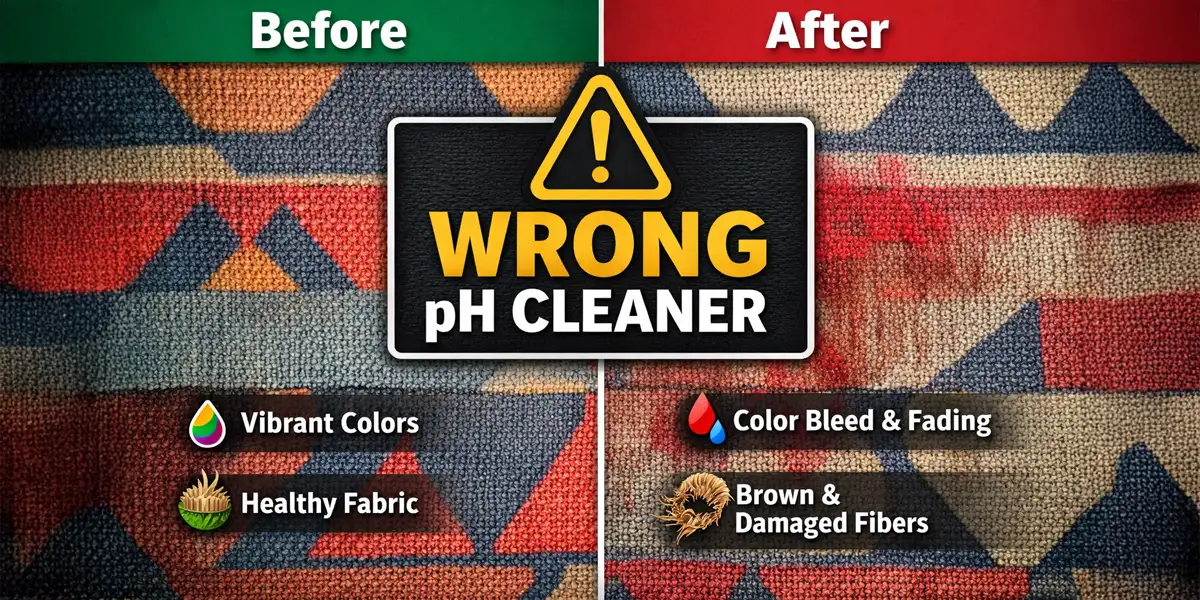
- Dye bleed or color loss
- Browning or yellowing
- Texture distortion
- Fiber weakening
- Permanent water marks
And once that damage is done, there’s no chemical miracle that reverses it.
Why High pH Is Especially Dangerous on Upholstery
Most upholstery manufacturers recommend mild to neutral pH cleaning solutions, typically in the range of pH 5 to 8. High‑pH products can spike well above that.
Here’s why that matters:
1. Dyes React Differently on Fabric
Upholstery dyes are often topical or loosely bonded. High alkalinity can break those bonds, causing bleeding or fading.
2. Natural Fibers Don’t Tolerate Alkalinity
Cotton, wool, linen, and rayon can all react badly to high pH. Shrinkage, browning, and fiber distortion are common.
3. Upholstery Is Rarely Rinse‑Friendly
Unlike carpet, upholstery is harder to flush thoroughly. Residual alkalinity stays in the fabric longer, continuing to react after you leave.
4. Previous Cleanings Compound the Risk
A couch that survived one aggressive cleaning may not survive the fifth. Residual damage stacks quietly over time.
“But I’ve Used It for Years With No Issues” Isn’t Proof
This is the most dangerous mindset in upholstery cleaning.
No issues doesn’t mean safe. It means lucky.
Upholstery damage is often:
- Fabric‑specific
- Dye‑specific
- Construction‑specific
- History‑specific
The job that fails is usually the one where:
- The fabric blend is unknown
- The dye system is unstable
- The customer never cleaned it before
- The piece is imported with zero labeling
That’s when a high‑pH product stops being a cleaner and starts being a liability.
How to Clean Upholstery the Right Way
Professional upholstery cleaning should follow a simple hierarchy:
1. Identify the Fabric
If you don’t know what you’re cleaning, slow down. Tags help, but testing matters more.
2. Always Test First
Colorfastness tests are not optional. They’re your insurance policy.
3. Use Fabric‑Safe Chemistry
Neutral or slightly acidic upholstery cleaners dramatically reduce risk while still delivering results.
4. Control Moisture and Dwell Time
Over‑wetting and long dwell times amplify chemical reactions.
5. Neutralize When Needed
When heavier chemistry is unavoidable, proper rinsing and neutralization are critical.
Upholstery‑Safe Cleaning Products We Recommend
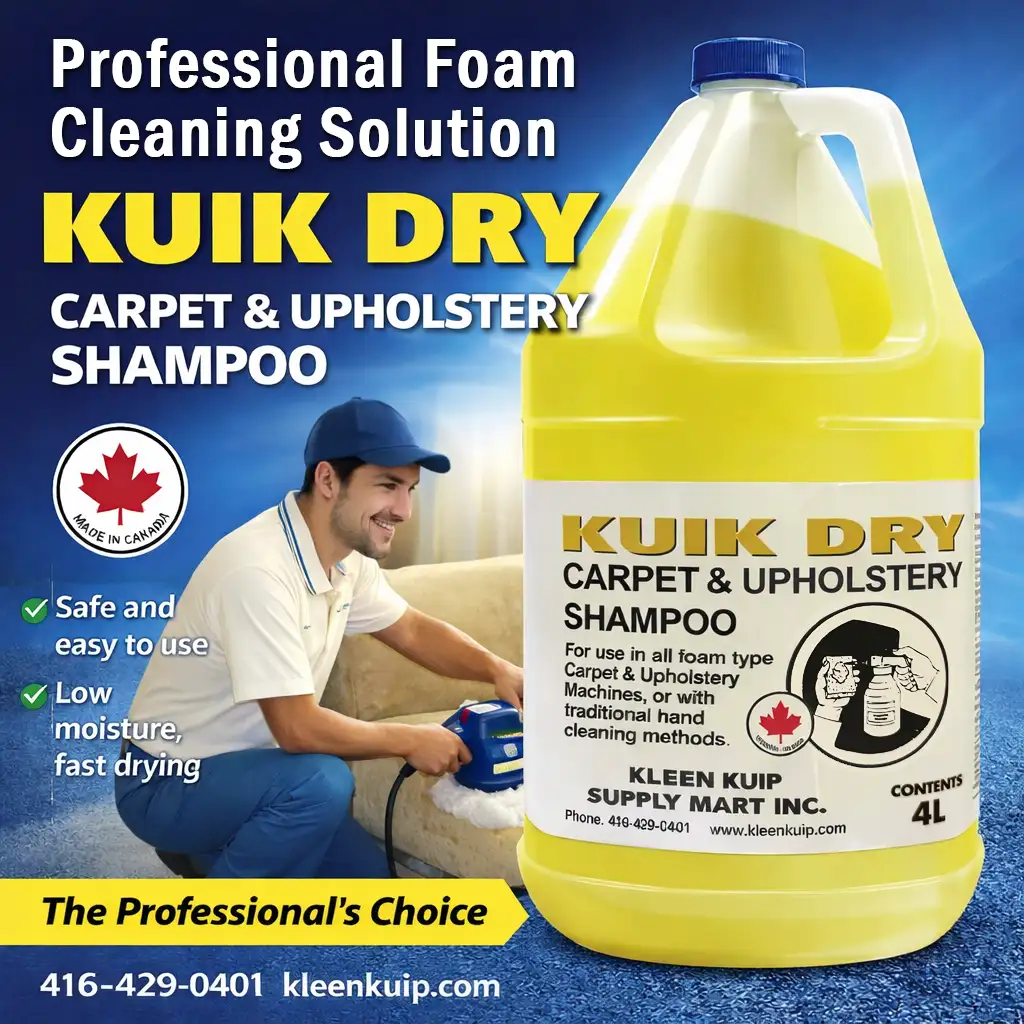
At Kleen Kuip Supply Mart, we stock professional products designed specifically for upholstery fabrics, not repurposed carpet cleaners.
Some solid options include:
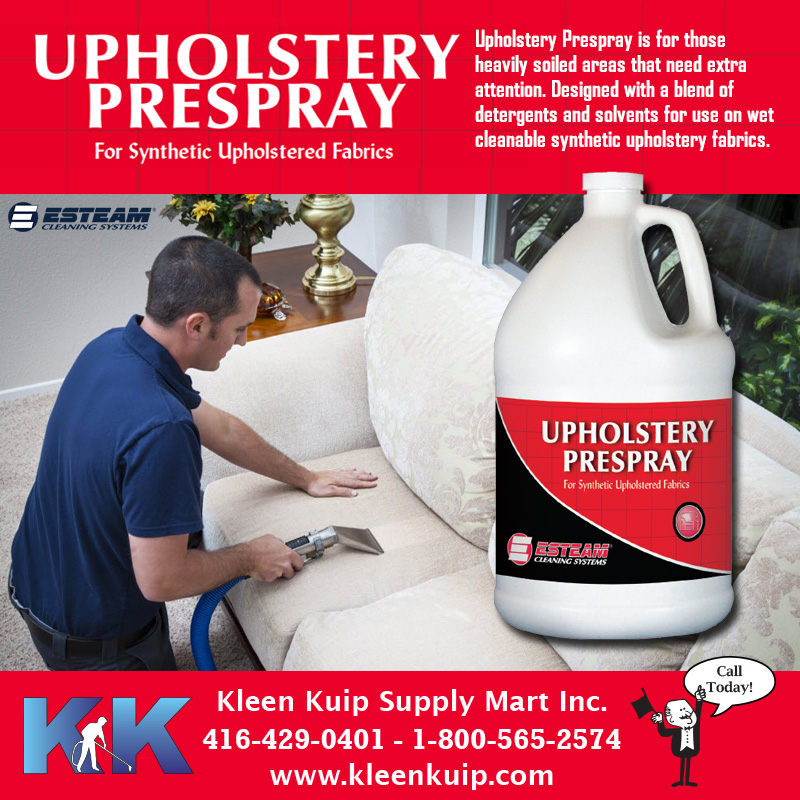
- Low‑pH upholstery presprays for synthetic and blended fabrics
- Neutral fabric cleaners for routine maintenance
- Specialty spotters designed for dyes, tannins, and oils
- Fabric rinses and neutralizers to stabilize fibers after cleaning
If you’re unsure which product fits the job, that’s the moment to ask before spraying.
Why This Matters for Your Business
One ruined couch can:
- Erase months of profit
- Trigger insurance claims
- Cost you a long‑term client
- Damage your reputation
Most upholstery disasters aren’t caused by bad intentions. They’re caused by using the wrong chemistry on the wrong fabric.
The safest cleaners aren’t the strongest ones. They’re the ones designed for the surface you’re cleaning.
Talk to People Who See the Mistakes Every Day
We don’t just sell chemicals. We see what happens when things go wrong.
If you’re cleaning upholstery in Toronto, North York, Scarborough, or anywhere in the GTA and want to make sure you’re using the right products, stop by Kleen Kuip Supply Mart or talk to our team.
Learning this lesson from a blog post is cheaper than learning it from a ruined sectional.
Kleen Kuip Supply Mart
Serving professional cleaners across Toronto and the GTA
Upholstery cleaning supplies, training, and real‑world advice
Industry standards from the IICRC emphasize proper fabric identification, pH-appropriate cleaning solutions, and testing before cleaning to prevent permanent damage to upholstery fibers.
